Manifesta purposely strives to keep its distance from what are often seen as the dominant centres of artistic production, instead seeking fresh and fertile terrain for the mapping of a new cultural topography.
About
Manifesta 16 Ruhr This is not a church takes place from the 21st of June until the 4th of October 2026 across four cities in Germany’s Ruhr Area: Duisburg, Essen, Gelsenkirchen and Bochum.
Manifesta 16 Ruhr This is not a church presents examples of how twelve under-used post-war church buildings can be transformed into communal spaces that foster community cohesion and artistic innovation. By repurposing and rethinking these buildings, through culture and artistic interventions, as infrastructures for the surrounding neighbourhoods, the nomadic biennial aims to create new places for encounter and exchange within communities across the Ruhr Area.
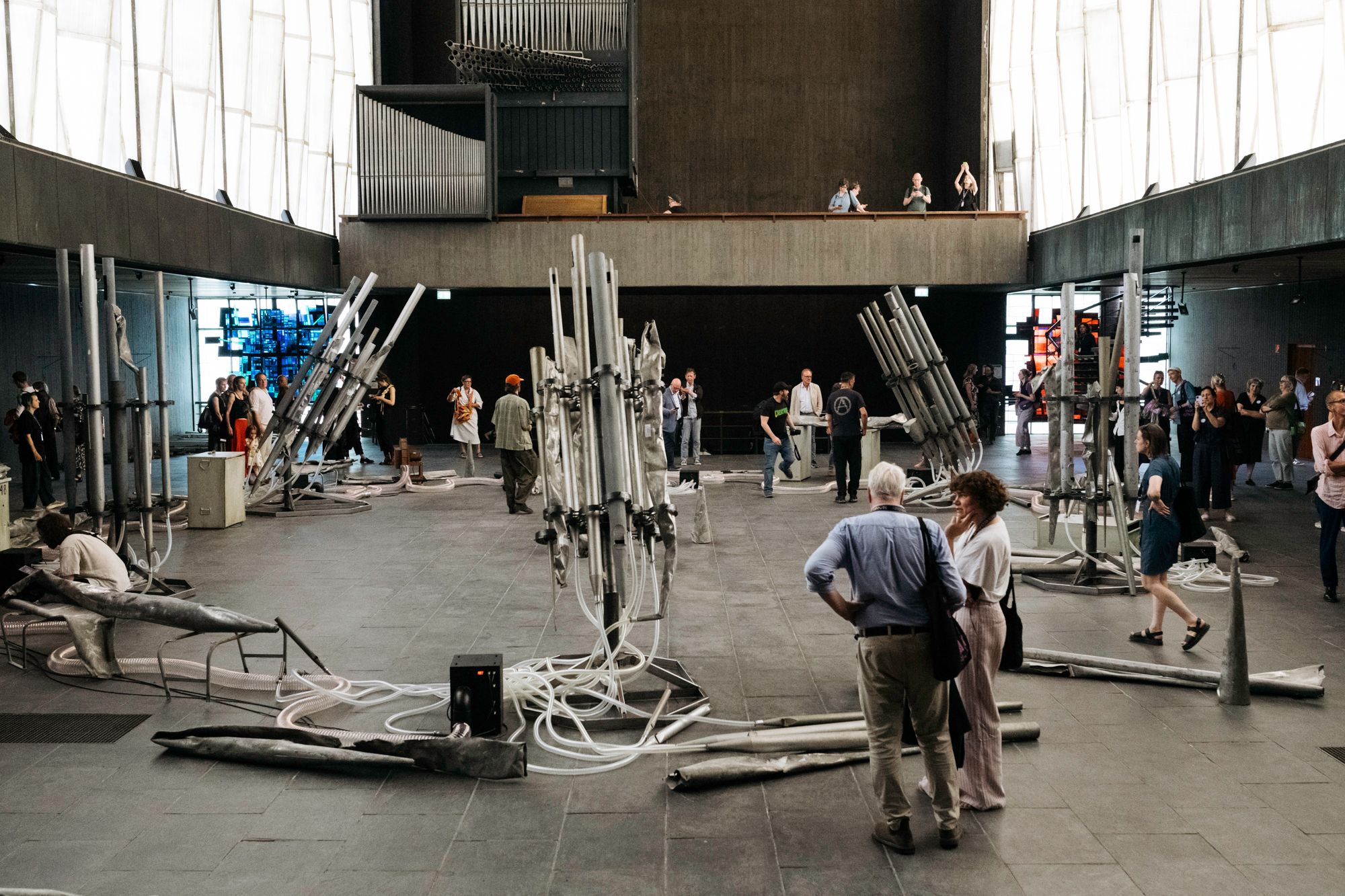


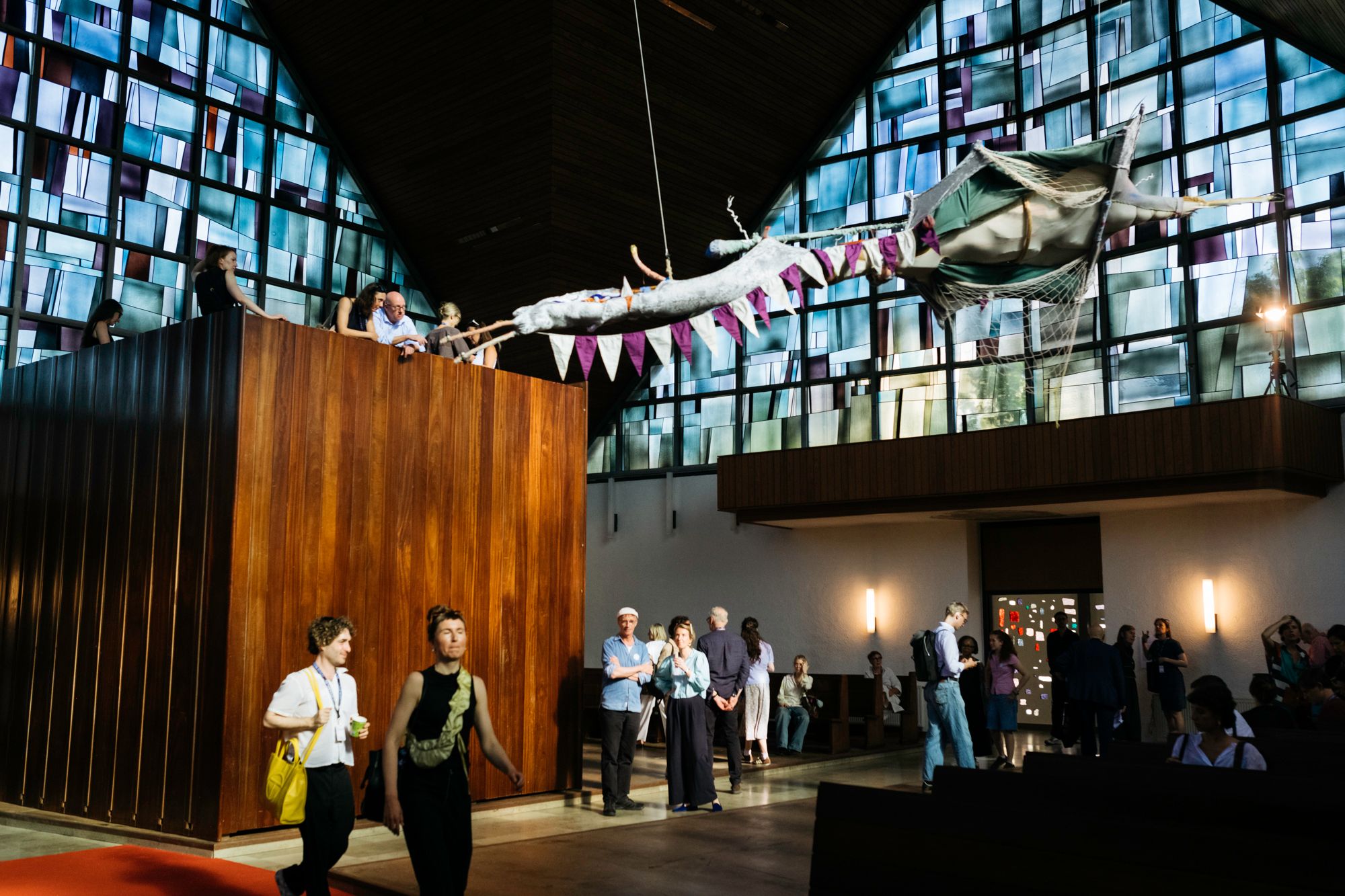
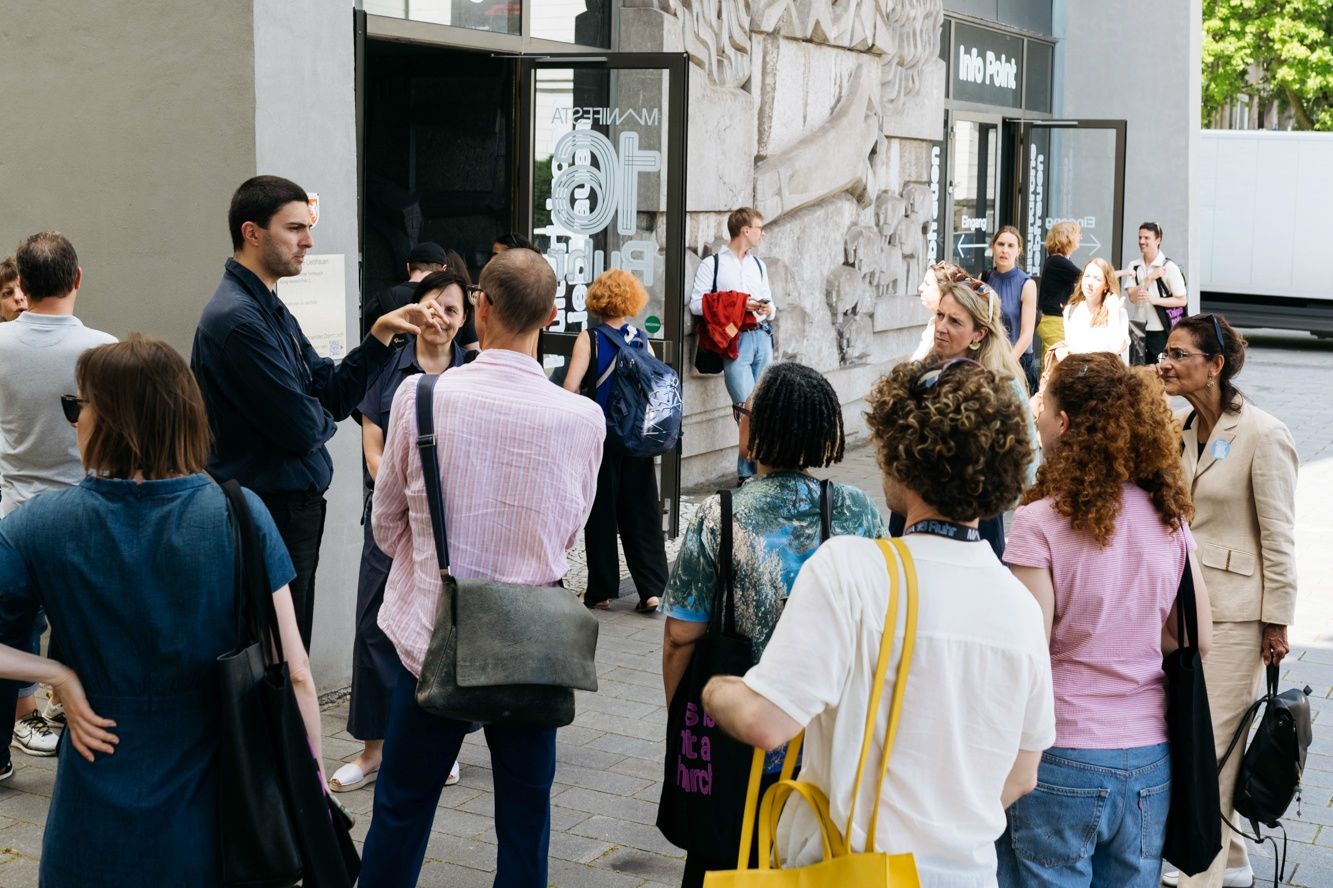
Ouranophobia 47051, 2026 © Abbas Zahedi. Photo © Manifesta 16 Ruhr / Silviu Guiman.
Pre-biennial
In the lead-up to the biennial’s opening, a Warm Up programme of pre-biennial events was organised in and around the Manifesta 16 Ruhr offices and the adjacent St. Josef’s Church in Gelsenkirchen, responding to wishes of the surrounding neighbourhood. This included a creative market of local makers and artists, a community hangout with local initiative Keybâb Kollektiv and weekly basketball sessions with the local youth sports group, Social Ballerz.
During workshops in collaboration with TU Dortmund, architecture students presented sketches for Urban Interventions that transform empty former church buildings into communal hubs with a new cultural or social purpose. These ideas were integrated into the Manifesta 16 Urban Vision.


Social Ballerz in St. Josef in Gelsenkirchen, 2026. © Manifesta 16 Ruhr / Anton Vichrov.
The Biennial
Manifesta 16 takes place in twelve former and under-used church buildings across Duisburg, Essen, Gelsenkirchen and Bochum. These striking buildings host the artistic programme, showcasing how churches can be transformed into something new shaped by and for its communities.
Manifesta 16 Ruhr’s programme is developed by the Artistic Team and consists of new site-specific artistic commissions by participants from all over the world. From cooking sessions to club nights, and family activities to weaving workshops, the biennial activates these church buildings through an extensive programme of events, workshops and talks.
Within the Ruhr Area’s layered historical context, Manifesta 16 positions itself as more than an art biennial – rather as an incubator of change and a transdisciplinary mechanism for urban and cultural reactivation.
The Federal President of Germany, Frank-Walter Steinmeier, has assumed the patronage of Manifesta 16 Ruhr. We are delighted by this distinguished patronage, which further highlights the international significance of Manifesta as Europe’s only nomadic biennial. The following is stated in the letter from the Head of the Office of the Federal President:
Read more about the conceptual framework:
Manifesta 16 Ruhr Artistic Team, 2025. Photo © Manifesta 16 Ruhr / Charlotte Ernst

Manifesta 16 Ruhr Artistic Team, 2025. Photo © Manifesta 16 Ruhr / Charlotte Ernst.
Manifesta 16+ Programme
The Manifesta 16+ Programme sits alongside the biennial's programme and was launched through an open call, from which an international jury selected 16 projects to be realised by grassroots initiatives in Dortmund, Herne, Mülheim an der Ruhr, Marl, Bottrop, Essen, Bochum, Gelsenkirchen, Duisburg and Oberhausen. Key factors in the decision were each initiative's local grounding and its commitment to working with communities on site. The selected initiatives will transform vacant churches into open meeting places where neighbourhoods can come together.
Implemented from 21st of June to 4th of October 2026, the Manifesta 16+ projects highlight the potential of the architectural and social spaces of the former churches and demonstrate how these sites can be revitalised through collective initiatives.
Working closely with Manifesta 16 Ruhr, the project teams aim to create long-term impact within their neighbourhoods. By involving local residents, they seek to develop sustainable models for the future use of these spaces beyond the duration of Manifesta 16 Ruhr.
Read more about the Manifesta 16+ and the Open Call and members of the Jury:
Citizen Consultation Workshop Duisburg & Bochum © Anton Vichrov / Manifesta 16 Ruhr


